Category: BOLG

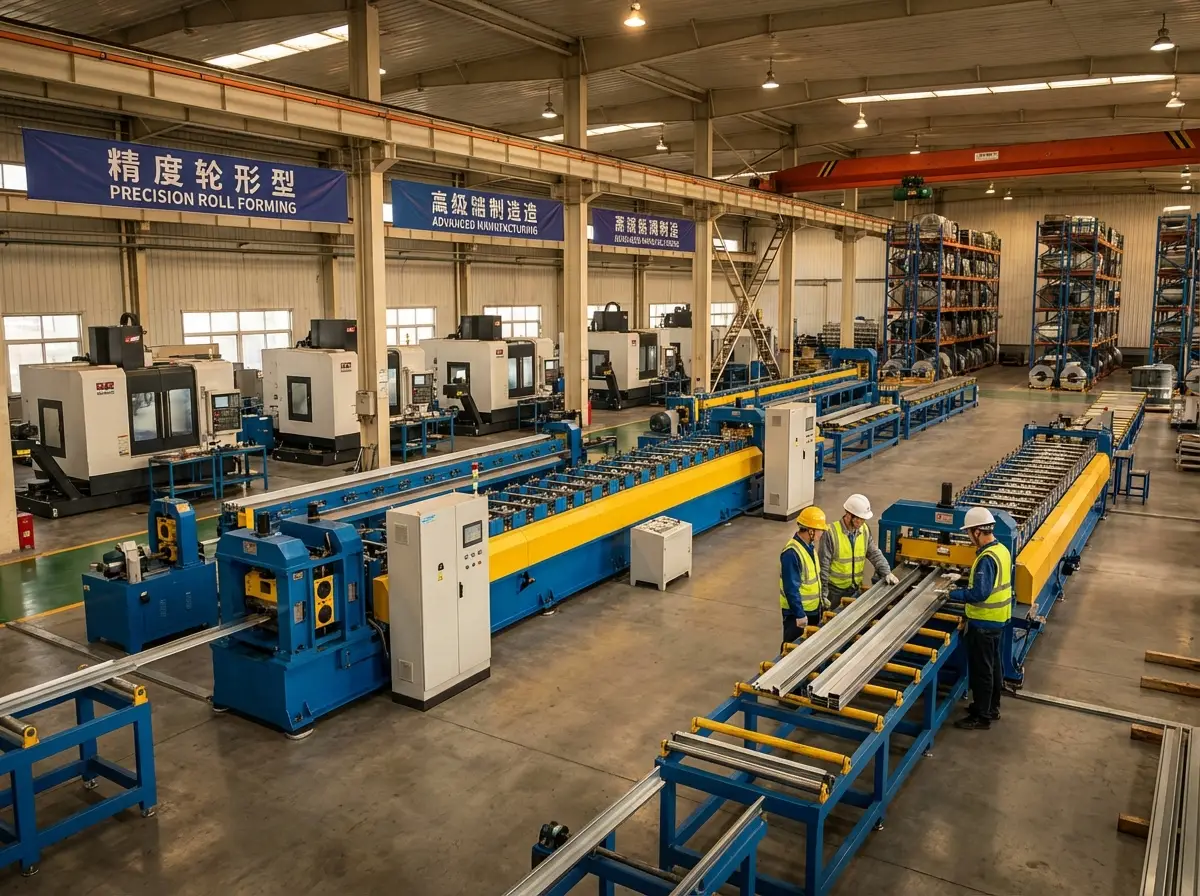
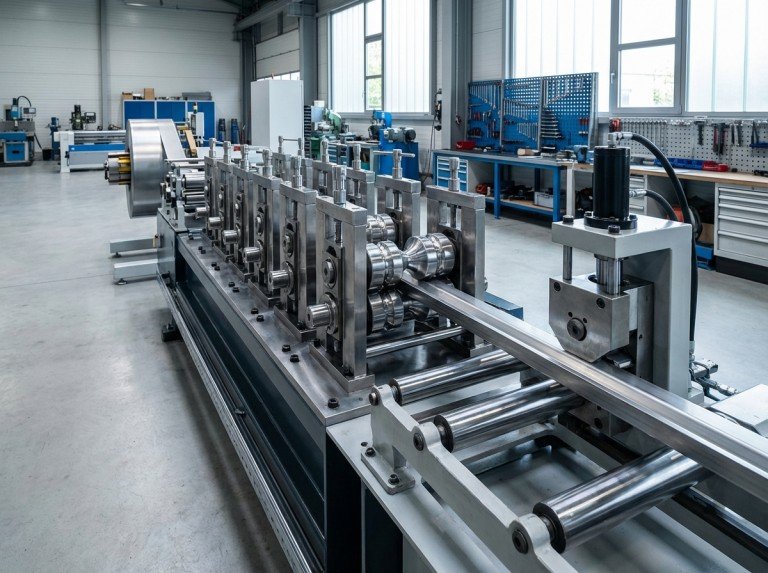
Cold forming machine manufacturer in China showing CNC machining, roll tooling, and factory production capability
BOLG

Cold Forming Machine Manufacturer in China

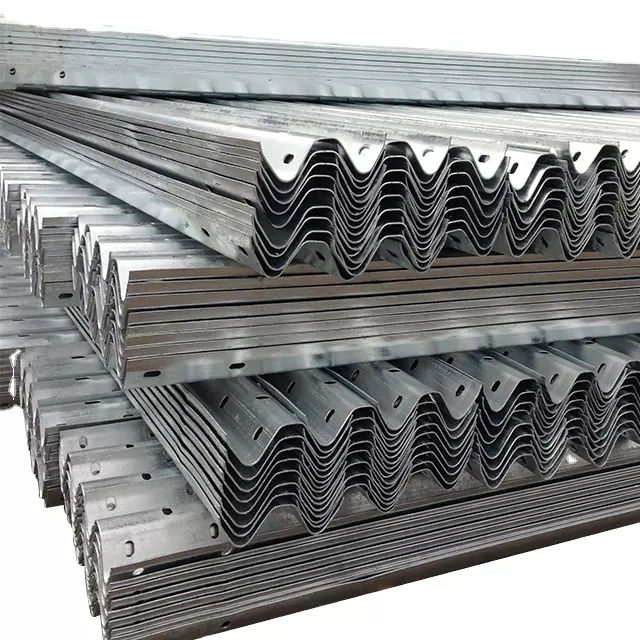
Selecting a cold forming machine manufacturer in China depends on your target profile geometry, material thickness range, production line integration requirements, and the verification depth your procurement team can apply before committing capital. Chinese manufacturers have scaled in-house CNC machining, roll tooling fabrication, and export-proven delivery records across Jiangsu, Zhejiang, Hebei, and Guangdong. US procurement managers who approach the process with structured technical criteria consistently find viable, export-proven suppliers across these regions. This guide gives you the evaluation framework to separate that tier from the trading companies and assemblers that dominate search results. This guide covers conventional cold roll forming lines and integrated production systems for commercial, industrial, automotive, construction, furniture, and warehousing applications processing materials up to 3.0 mm in single-speed or servo multi-profile configurations. It does not cover: long-span stadium roof panel systems, blast-resistant enclosure profiles, equipment subject to continuous fatigue loading from heavy-dynamic-cycle manufacturing environments, high-speed packaging integration above 20 m/min, composite material or elastomer co-extrusion lines, or lines incorporating post-forming heat treatment processes. Why Cold Forming Equipment Sourcing from China Produces Different Results by Supplier Tier Cold forming machine sourcing from China varies by supplier tier, regional specialization, and in-house engineering depth, with direct manufacturers offering
Read More »
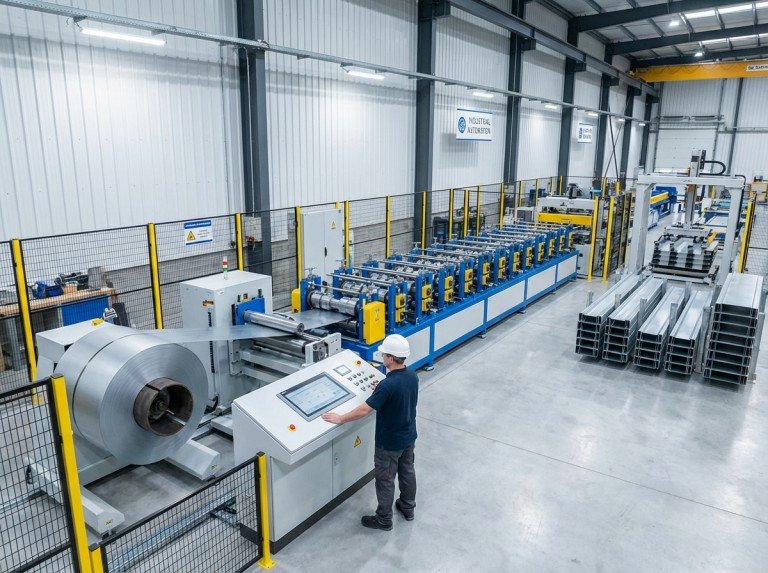
Cold roll forming machine production line with uncoiler, roll forming stations, and automatic cutting system in an industrial factory
BOLG

Cold Roll Forming Machine Price Guide: Costs & Quote Tips

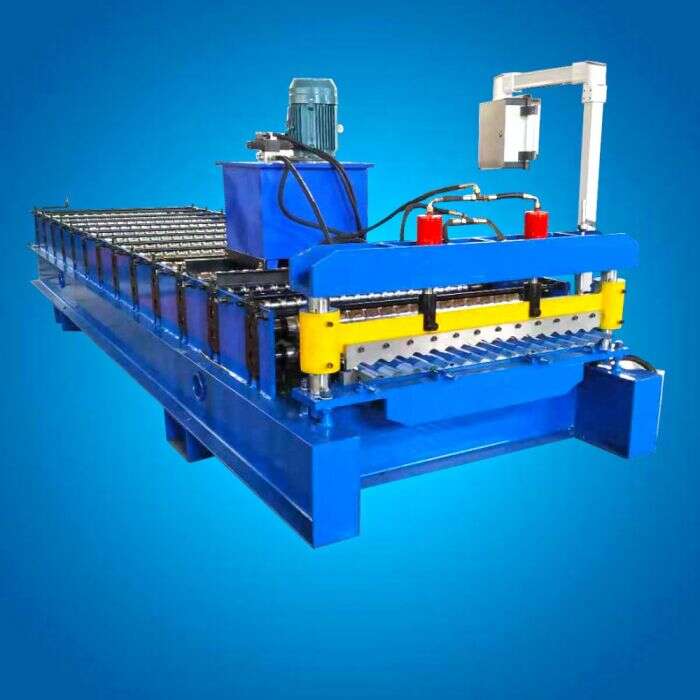
Cold roll forming machine pricing for commercial and industrial production lines varies by machine class, integration scope, material compatibility, and automation tier—with standalone unit prices ranging from $20,000 for light-gauge entry machines to $500,000 or more for fully automated multi-process lines. This guide provides the pricing framework, cost driver analysis, and quote verification tools that production managers and manufacturing engineers need before committing capital. We draw on direct line configuration experience across construction profiles, automotive components, warehouse racking, and furniture frames to give you sourcing benchmarks that reflect real purchase scenarios, not stripped-down catalog entries. This guide addresses conventional cold roll forming machines and integrated line solutions for commercial and industrial profile production. This guide does not cover specialized equipment such as hydroforming lines, stretch-bending systems, rotary draw bending machines, or equipment designed exclusively for tube mill or pipe manufacturing. Cold Roll Forming Machine Price Ranges by Machine Type Cold roll forming machine prices range from $20,000 for light-gauge entry units to $500,000 or more for fully automated multi-process lines, with five machine classes covering the commercial and industrial production market. We open with this structured price reference table so readers can immediately anchor budget expectations before exploring cost drivers

Read More »
V band clamp roll forming machine in factory
BOLG

How to Choose a V Band Clamp Roll Forming Machine

Selecting a V band clamp roll forming machine for in-house production depends on material gauge, strip width capacity, roller die hardness, and downstream integration scope—with each misaligned variable compounding scrap rates and tooling costs across every production run. Production managers who treat this as a commodity equipment purchase routinely discover that a machine specified for mild steel performs poorly on SUS304 stainless within 80–120 runtime hours, requiring die replacement and dimensional recalibration before output stabilizes. We frame this guide around the verification decisions that separate a productive long-term asset from an expensive retrofit problem. This guide addresses conventional V band clamp roll forming machines used in automotive exhaust, industrial piping, ventilation, and connector manufacturing. It does not cover specialized forming lines for fatigue-loaded aerospace fasteners, large-diameter pressure vessel rings, or custom clamp geometries requiring multi-axis CNC profile bending outside standard roll forming process parameters. The evaluation variables we cover—speed, gauge, die hardness, voltage, and integration scope—apply across single-station manual machines through fully servo-controlled automated lines. What a V Band Clamp Roll Forming Machine Actually Does A V band clamp roll forming machine converts flat metal strip into the V-profile cross-section that allows a clamp to seat simultaneously against two mating

Read More »
What Is Cold Roll Forming Machine
BOLG

What Is Cold Roll Forming Machine

Cold roll forming machines are used to form high-strength steel components at room temperature, also known as cold rolling, and are often used to process long lengths of metal to produce a variety of metal products including (lift rails, shelving etc.). The cross-sectional profile of the cold roll forming machinery is usually tailored to the specific needs of the customer. The forming kun is used to control the localised processing of the material to prevent folding and wrinkling during the process. The machine is designed to meet the needs of metal bending. What Cold Roll Forming Means? A cold roll forming machine shapes a metal strip. It works continuously at room temperature. The strip passes through multiple roll stands to create a constant profile. This is different from cold rolling, which mainly reduces thickness. Cold rolling also improves flatness and surface finish. Cold roll forming focuses on shaping the strip. It makes channels, rails, frames, and other long parts. I think of it as “progressive forming.” Each stand makes a small, controlled bend. This way, the profile reaches its final shape smoothly. It avoids harsh, single-step bending. That kind of bending can cause wrinkles, edge waves, or cracks. How do roll forming

Read More »
Benefits of Using a Cold Roll Forming Machine-Co-effort
BOLG

Benefits of Using a Cold Roll Forming Machine

At Co-effort, we are committed to advancing manufacturing technologies. This commitment is shown by our state-of-the-art cold roll-forming machines. This process, which shapes metal strips into specific profiles without applying heat, dates back to the early 1900s. It was first developed for small car parts. But, it has become key in industries like construction, cars, and aerospace. This is because it is efficient and precise. Cold roll forming is valued in modern manufacturing. It can make many complex shapes quickly and with consistent quality. This method keeps the strength of materials. It’s an eco-friendly alternative to traditional forming. It does this by making less waste and using less energy. We will continue to explore the uses of cold roll forming. Let us delve into the key benefits this technology brings to many sectors. We will highlight why businesses choose Co-effort machines for their production needs. Table of Contents Key Benefits of Cold Roll Forming Machines Cold roll forming machines offer speed, efficiency, precision, and sustainability. Cold roll forming is a compelling solution for businesses. They want to invest in manufacturing tech that gives quality and value. High Production Speed: Cold roll-forming machines are known for their fast production. They are

Read More »
What Materials Are Used For Roll Forming?
BOLG

What Materials Are Used For Roll Forming?

The roll forming process refers to the process of forming various complex parts based on the plastic movement characteristics of materials and the principle of rolling extrusion. Rolling deformation is a line contact, which is carried out continuously and step by step. The required deformation force is small. One stroke can produce one or several workpieces. Compared with the cutting and grinding processes, the roll forming process has not only high production efficiency and material saving, but also high product strength and stable quality. This process is especially suitable for processing workpieces with short advantages that are difficult to cut, especially for products with an annual output of millions of pieces in large quantities. The roll forming process is the most favorable and has the most considerable economic benefits. Roll forming began in Europe in the 1960s. As the roll forming tool has the advantages of high production efficiency, saving materials, increasing product strength, etc., not only the application of threaded fasteners industry, but also the automobile, bicycle and other industrial departments use the roll forming process to process parts with complex shapes. With the development of technology and production, people pay more and more attention to the roll forming

Read More »
Cold Roll Forming VS Hot Rolling Forming
BOLG

Cold Roll Forming VS Hot Rolling Forming

Why should we choose different rolling processes? Different applications correspond to different processes. It is important to choose products with appropriate processes.We have made a distinction here between the two processes. 1.Different properties Cold roll formed section steel: it refers to the section steel of various cross section shapes and sizes made of hot rolled or cold rolled strip steel by roll formed. Hot rolled section steel: It refers to the steel with various geometric section shapes rolled from heated steel billets. 2. Different processes Cold roll formed steel: cold roll formed steel is the main material for making light steel structure, which is made of steel plate or steel strip by cold forming. Its wall thickness can not only be made very thin, but also greatly simplifies the production process and improves the production efficiency. It can produce various sections and cold-formed sections of different materials with uniform wall thickness and complex section shape that are difficult to produce by the general hot rolling method. Hot rolled section steel: most of the hot rolled section steel of low alloy steel is hot-rolled deformed bar and section steel rolled with 16Mn, and the special-shaped section steel is less used. Compared

Read More »
How is Band Clamp Produced
BOLG

How is Band Clamp Produced?

metal band clamps For the application of metal band clamps in the automotive industry, it mainly involves the inlet pipe interface, exhaust pipe interface and cooling inlet and outlet pipe interface of the engine. Therefore, both gasoline engine and diesel engine will be involved. A . For passenger cars, gasoline engines are mainly usedintercooler inlet connection, cooling water pipe connection, turbocharger end connection, exhaust system connection, gasoline pipeline connection B . For commercial vehicles. Mainly diesel engines, intercooling air inlet connection, cooling water pipe connection, turbocharger end connection, exhaust system connection, gasoline pipeline connection and DPF system connection C.Broader product categories and application scenarios V-Band: Turbo and Exhaust applicationsFull design, engineering and testing services T-Bolt: With or without springAmerican T-bolt/Trunnion styleEuropean Bolt & Barrel Style Perforated Gear Drive: American style bandMicroRegularPowerGear/HD FlexGearWaveSeal/SmartSeal Liners Non-Perforated Gear Drive: European style bandW1-W5 material options9mm & 12mm band widthsSmartSeal Liner Band Clamp entire complete production composition 1.V-Band Clamp It needs use our V band clamp roll forming machine Our machine is fully automatic, from the feeding to leveling to forming to the final cutting and rolling, without manual operation and just need one time form. The speed can be adjusted, which can effectively save

Read More »
Roll Forming Machine Working Principle-Cold Forming Machine Manufacturers
BOLG

Roll Forming Machine Working Principle

The Roll Forming Machine Working Principle is the process of forming profiles of different cross-sectional shapes by passing a steel plate of a certain size through several sets of up and down pressed rolls. The process characteristics of roll forming determine the various advantages of roll forming, making roll forming machines widely used in profile production. The process characteristics determine the low investment in roll-forming, the rapid entry into production, the high output and the possibility of a highly automated production line. Moreover, the equipment has high stability, high production efficiency and low defective rate. The equipment is easy to maintain and other characteristics. Roll forming machine construction types 1.Arch structure forming machine Advantages: The price is favorable, and the overall weight of the equipment is relatively light. Disadvantages: The structure is unstable and the precision of the products produced is not high. 2.Standard roll forming machine (Guide post guide sleeve) Standard roll forming machine is a common design method. Generally, the frame on the drive side is the shaft positioning side, which is used to provide power. The operating side is the other end of the support shaft, and the operating side is movable, so it is convenient to

Read More »

Roll Forming Machine (Design & Build Guide)

Roll Forming Machine is a processing machine that passes rolled steel or other long strips of metal through a series of Hardened Steel Rollers, which are controlled using a pre-set PLC code, to achieve a specific processing operation on the sheet metal at each station to produce a specific metal part. It is characterised by high progress, high speed, low scrap and one-off forming. It is therefore a very economical way of processing and is often used for the processing of large quantities of parts. Note: The Roller, also known as a station, is a mechanical component used to process sheet metal, which is gradually bent as the sheet metal is processed between the roller, in conjunction with multiple rollers operating in steps to obtain the required shape of part. Design guide for roller forming machines As mentioned above, the Roll Forming Machine process involves feeding the sheet metal into the forming machine and forming the sheet by means of hardened steel rollers. In the case of coil production, the Sheet Metal Decoiler series is required to assist with the loading, straightening and cutting operations to increase the efficiency of the forming machine. For different customised requirements such as additional

Read More »